


 4.6 Stars | 5000+ Reviews

Heat Gun for Soldering - SolderStick
Heat Gun for Soldering - SolderStick
 Controlled 392°F / 200°C, every time
- Light enough to hold all day
- Compact enough for tight spaces

 In stock - Ships On Sunday, October 18
-

Free Worldwide Shipping
-

30 Day Money Back Guarantee
-

24/7 Customer Support


AS FEATURED IN


Why a lighter isn’t enough
 Heat Gun
 A Lighter


Frequently Asked Questions
You can, and that is exactly the problem. A flame is hottest at one point, so one side of the sleeve scorches while the other side never shrinks, and the soot sits on the joint you are trying to seal. This puts out hot air instead, so the heat wraps the whole connector at once and the solder ring melts evenly.
Yes. It runs at a controlled 392°F / 200°C, which is the range a solder-seal connector is built for. The ring flows and the tubing shrinks down without you having to judge anything by eye.
No, and that is deliberate. It is fixed at 392°F / 200°C because that is the temperature the job needs. There is no dial to set wrong, no guessing, and no way to cook a connector because you left it on a higher setting from the last job.
Not at this temperature, used the way it is meant to be used. Keep it moving around the joint and pull away once the tubing has drawn in and the solder has flowed. The nozzle aims the air, so you are heating the connector rather than everything around it in the loom.
Yes. It is built for the solder-seal connectors, and it handles ordinary heat shrink tubing, butt connectors, ring terminals and spades just the same.
No, it plugs into a standard wall outlet. That is what lets it hold one steady temperature for as long as the job takes instead of fading partway through.
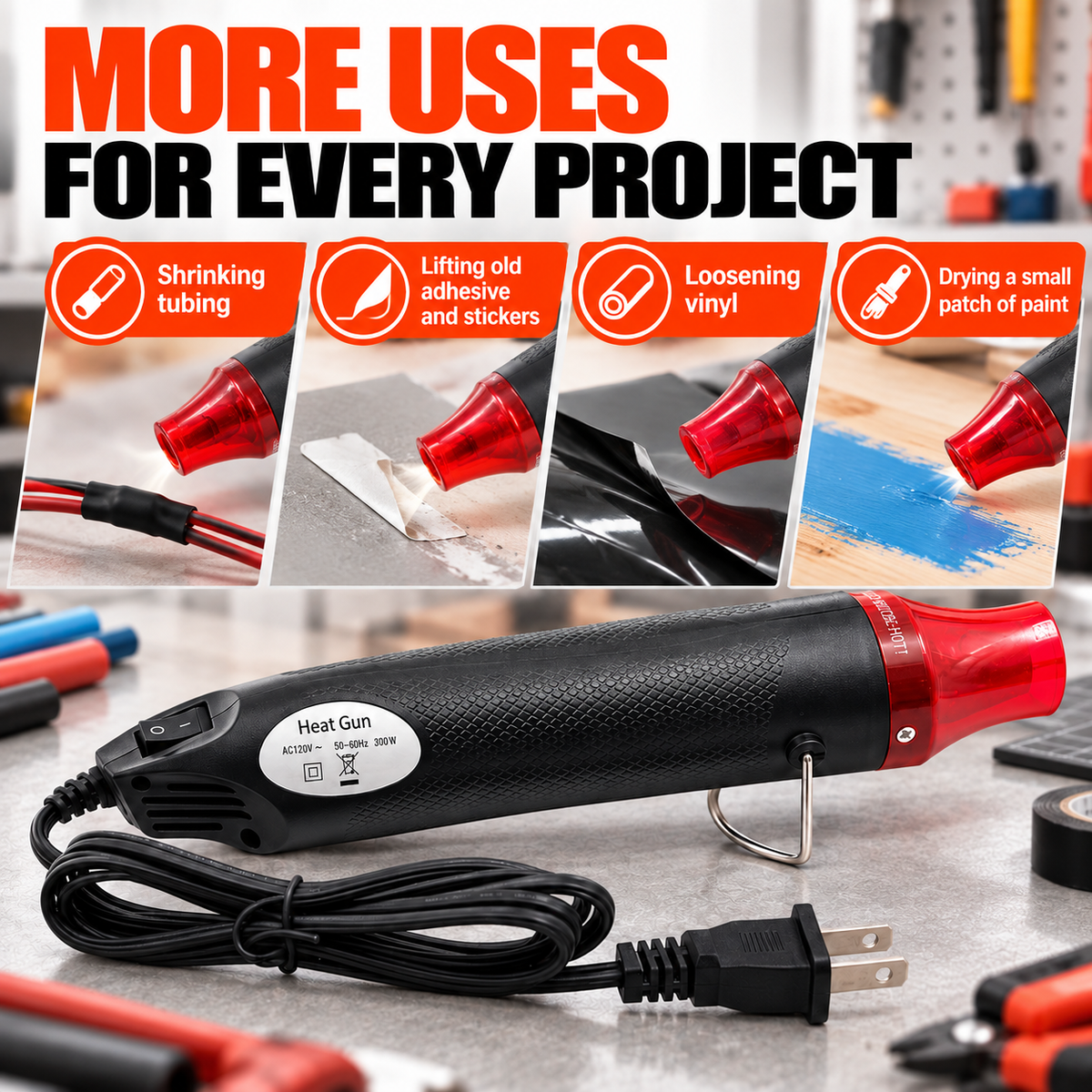
Anything that wants controlled heat rather than a flame: shrinking tubing, lifting old adhesive and stickers, loosening vinyl, drying a small patch of paint. It is a compact tool, so it is happiest on small work rather than stripping a door frame.
3–5 business days in the USA, and 7–10 business days everywhere else.
If you are not completely satisfied, we will make it right. Every SolderStick product is covered by a 30-day money-back guarantee, and our support team is there if you need them.